
Why Thailand Is an Ideal Backup Manufacturing Location for Global Supply Chains
Updated: Oct 24, 2025
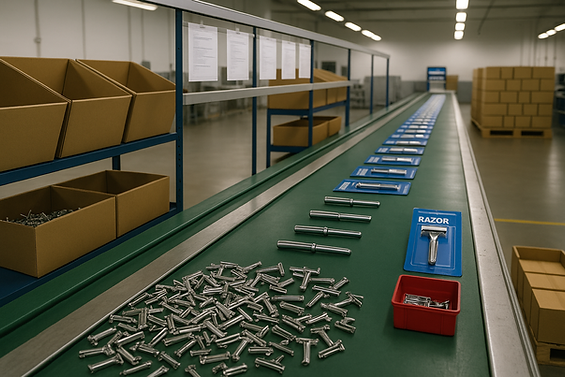
Over the past few years, many companies are looking to adopt the China + 1 strategy to reduce their reliance on a single manufacturing base. While this is a pretty simple concept, executing it seems to be a bit more difficult to master. While China remains the world’s most advanced manufacturing hub, global supply chain disruptions, rising tariffs, and geopolitical tensions have forced brands to rethink their sourcing strategy.
The challenge is also very clear, no other country in the world can replicate what China has built in terms of supply chain depth, speed, and supplier network. That’s why most companies should not try to replace China entirely. But instead, they should try to find the right manufacturing location that allows them to continue to leverage the Chinese supply chain. The goal is to maintain access to China’s strong supply chain while shifting part of the production, such as assembly or packaging, to another country to reduce risk and optimize landed costs.
Among the alternatives, Thailand has emerged as one of the most attractive locations for backup suppliers. Its proximity to China, trade agreements with major markets, language capabilities, and growing industrial infrastructure make it a strategic partner, not a replacement, for China.
Strategic Location and Proximity to China
One of Thailand’s biggest advantages as a backup manufacturing location is its strategic location in Southeast Asia, just a short distance from Southern China, the world’s largest manufacturing hub. This close proximity allows companies to maintain their existing supplier base in China while shifting specific parts of their production, such as final assembly, packaging, or testing, to Thailand.
This geographical advantage translates directly into shorter lead times, lower shipping costs, and faster response to supply chain fluctuations. Many manufacturers already rely on a hybrid model, sourcing components from China and finishing production in Thailand to qualify for a different country of origin and avoid certain tariffs.
Thailand also benefits from well-established logistics infrastructure, including deep-water ports and reliable air freight networks that connects it to China and other ASEAN markets. This makes it possible to move materials quickly between the two countries, creating a flexible and resilient supply chain rather than a fragmented one.
Trade Agreements and Preferential Access
Another key reason Thailand stands out as a strong backup manufacturing location is its broad network of trade agreements with major global markets. Thailand is part of several bilateral and multilateral trade pacts, including agreements with the United States, the European Union, Japan, and ASEAN countries. These agreements can give companies preferential duty rates or even duty-free access for qualifying products.
For many companies, shifting final assembly or packaging to Thailand can help reduce tariff exposure, especially when exporting to the U.S. and Europe. This is particularly valuable for companies facing tariffs or other trade barriers on goods manufactured entirely in China.
In addition to duty savings, Thailand’s trade framework offers more predictable and stable conditions for long-term production planning. When combined with a well-structured country-of-origin strategy, it allows brands to optimize landed costs while keeping their component sourcing in China intact.
This makes Thailand a natural complement to China, enabling companies to diversify their manufacturing footprint without fully rebuilding their supply chain from scratch.
Language Skills and Business Mindset
One of the underestimated advantages of manufacturing in Thailand is the country’s strong English proficiency compared to many of its regional neighbors. While operators will not speak English, many professionals in engineering, management, logistics, and customer service roles are comfortable communicating with international customers. This helps streamline project coordination, reduce miscommunication, and speed up the entire manufacturing process.
Thailand’s business mindset also aligns well with international manufacturing partnerships. While Thai companies may not be as aggressive as Chinese suppliers, they are eager to attract foreign business and are steadily improving their capabilities to meet international standards. Over the past decade, the Thai government and private sector have actively encouraged foreign investment, particularly in manufacturing, through various programs and incentives.
This openness creates a collaborative environment where foreign companies can work closely with Thai partners to build up production capacity and establish a reliable backup manufacturing base. It’s less about replacing an existing supply chain and more about creating a stable, complementary location that adds flexibility and resilience.
Growing Industrial Capabilities
Thailand has steadily transformed itself from a low-cost production hub into a diversified and capable manufacturing base. Over the past decade, the country has expanded its industrial capacity across several key sectors, including plastics, metals, automotive, electronics, and consumer goods. This growth has made it increasingly attractive for companies looking for a reliable secondary or complementary manufacturing location.
The Thai government has played a major role in driving this development through Board of Investment (BOI) incentives, which provide tax breaks, duty exemptions, and investment support for foreign manufacturers. In addition, special economic zones and industrial parks have been established to streamline production setup, reduce bureaucratic hurdles, and improve infrastructure access.
Beyond incentives, Thailand’s manufacturing base continues to mature. There’s a growing pool of skilled workers and engineers, modern factories, and improved supplier networks. While it may not have the same component density as China, Thailand is rapidly closing capability gaps, especially in industries like automotive parts, electronics assembly, consumer appliances, and plastic injection molding.
This combination of industrial development and government support positions Thailand as a strategic manufacturing partner for companies seeking flexibility and supply chain resilience.
Reduced Tariff Exposure and Diversification Benefits
A major driver behind the shift to backup manufacturing locations is the need to mitigate tariff risks and geopolitical uncertainty. For many companies that rely heavily on China, sudden tariff increases can disrupt pricing models, reduce profit margins, and weaken competitiveness in key markets like the U.S. and Europe. By moving part of the production, such as final assembly, testing, or packaging, to Thailand, companies can often qualify for a different country of origin and avoid these additional duties.
This strategy is not about abandoning China. In fact, leveraging China’s supply chain and assembling in Thailand allows companies to maintain cost efficiencies while lowering landed costs and increasing pricing stability. It also gives manufacturers the agility to respond to policy changes, something that’s becoming increasingly important in global trade.
Beyond tariffs, diversification itself is a powerful risk management strategy. Having multiple production bases provides a buffer against disruptions, whether they stem from trade wars, shipping delays, pandemics, or natural disasters. Thailand offers a practical and cost-effective way to achieve this, not as a high-risk replacement, but as a complementary hub that strengthens the overall supply chain.
Conclusion: Thailand Manufacturing as a Backup Supplier Option
As global supply chains continue to evolve, companies are recognizing that diversification isn’t ust nice to have, it’s a necessity. China remains the manufacturing backbone of the world, but no single country should carry the full weight of a company’s production strategy. The most successful brands are those that build flexible, multi-country manufacturing networks that balance cost, speed, and resilience.
Thailand stands out as an ideal backup manufacturing location for this reason. Its close proximity to China, strong trade agreements, growing industrial capabilities, and business-friendly environment make it an excellent complement to China’s supply chain rather than a replacement. By strategically shifting part of production to Thailand, companies can reduce tariff exposure, improve lead time flexibility, and strengthen their ability to adapt to change.
In a world where uncertainty has become the norm, Thailand gives companies options, and having options is the foundation of a resilient supply chain.


Comments